Korea transit cards for tourists (2026): T-money, Climate Card, WOWPASS or NAMANE?
 By · the tripflutter team
This guide contains affiliate links. Booking through them costs you nothing extra and helps keep this site running. Disclosure
♥ Top eSIMAiralo Korea eSIMSee Airalo Korea plans →(opens in new tab)
Contents · 11
You can't tap a foreign credit card on Seoul's subway gates yet. According to Korean press, Seoul plans to switch to open-loop card payments by 2030, but for now every visitor needs a transit card (or a single-journey ticket, which costs ₩100 more per ride).
The good news: there are only four cards worth knowing about, and the choice mostly depends on two things — how many rides you'll take in Seoul, and whether you're leaving Seoul. Prices and rules below come from T-money, the Seoul Metropolitan Government, Seoul Metro, Busan Transportation Corporation, WOWPASS and NAMANE, checked on October 18, 2026.
The short answer
| Card | Card price | Works where | Top up with | Best for |
|---|---|---|---|---|
| T-money Travel Card | ₩4,000 | Nationwide buses, subways, taxis, airport buses | Korean won cash | Trips beyond Seoul, simple pay-as-you-go |
| Climate Card short-term pass | ₩3,000 + pass | Seoul subway and Seoul city buses | Foreign card at 273 stations (fee ~3.7%) or cash | Many rides inside Seoul |
| WOWPASS | about ₩5,000–6,000 | T-money transit + card payments in shops | Cash in 16 currencies, cards | One card for transit, shopping and cash |
| NAMANE | ₩6,000 | Nationwide transit (Korail Rail+) + payments | Card, Alipay+, won cash, PayPay | Topping up by card or app |
Seoul subway base fare is ₩1,550 with a transit card (₩1,650 with a single-journey ticket); city buses are ₩1,500. WOWPASS lists both ₩5,000 and ₩6,000 for the card on its own pages, so expect one or the other at the machine. The ₩3,000 Climate Card price is from T-money's visitor guide; Seoul introduced a new ₩4,000 card when it launched the Climate Pass in 2026, so check the price shown at the kiosk.
Which card should you get?
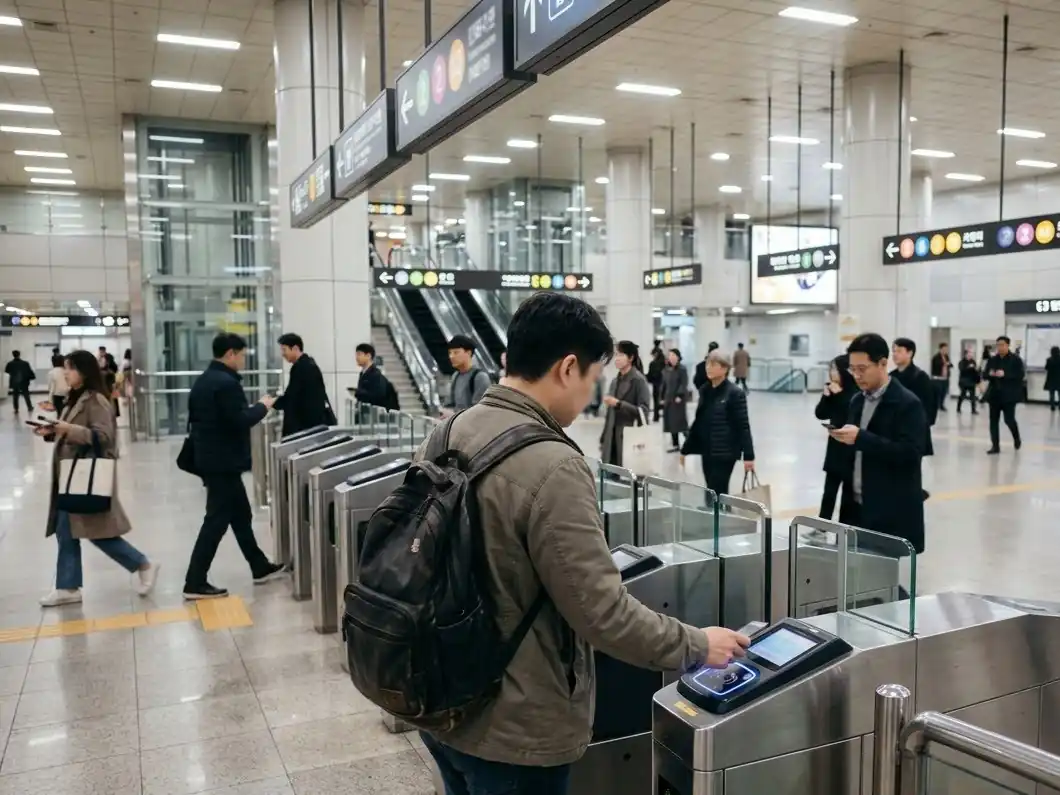
3–5 days in Seoul, riding a lot — Climate Card short-term pass. Unlimited Seoul subway and Seoul city buses for 1, 2, 3, 5 or 7 days (₩5,000 / ₩8,000 / ₩10,000 / ₩15,000 / ₩20,000), plus the card itself. At ₩1,550 a ride, a 1-day pass pays off once you pay for a fourth ride that day (₩6,200) — note that a bus–subway transfer within 30 minutes counts as one fare, not two.
Visiting Busan, Gyeonggi or using airport buses — T-money. The Climate Card doesn't cover the Shinbundang Line, metropolitan or airport buses, or anything outside Seoul. A T-money card works on public transport anywhere in Korea, including Busan.
You want one card for everything — WOWPASS. It's a T-money transit card and a prepaid payment card in one, and its machines accept cash in 16 currencies, including Japanese yen, Taiwan dollars and Hong Kong dollars. The catch: the transit balance is separate from the payment balance, so you need to move money across in the app or top up the transit side with won.
You'd rather top up by card or app — NAMANE. Its transit side runs on Korail's Rail+ (not T-money), works nationwide, and can be topped up with a credit card at kiosks or with a card, Alipay+ or PayPay in the app. Kiosks are at Incheon and Gimpo airports, Seoul Station, Myeongdong Station and Hongdae.
1. T-money — the standard card
T-money is the card most Koreans use. The foreigner version, T-money Travel Card, costs ₩4,000 at convenience stores and at the bus ticket office in Incheon Airport. A Travel Card+ (₩6,000, convenience stores) adds WOWPASS payments.
- Top up: with Korean won cash only, ₩1,000 to ₩90,000 at a time (balance up to ₩500,000), at convenience stores (GS25, CU, 7-Eleven, Emart24 and more) or subway-station machines.
- Works on: buses, subways, taxis, airport buses and express buses nationwide.
- Refund: the remaining balance comes back in won cash at convenience stores, minus a ₩500 fee (subway machines only top up). The ₩4,000 card price isn't refunded.
- Works everywhere in Korea
- Cheap card (₩4,000)
- Bus–subway transfer discounts
- Top-ups in won cash only
- Pay per ride — no unlimited option
2. Climate Card — unlimited rides in Seoul
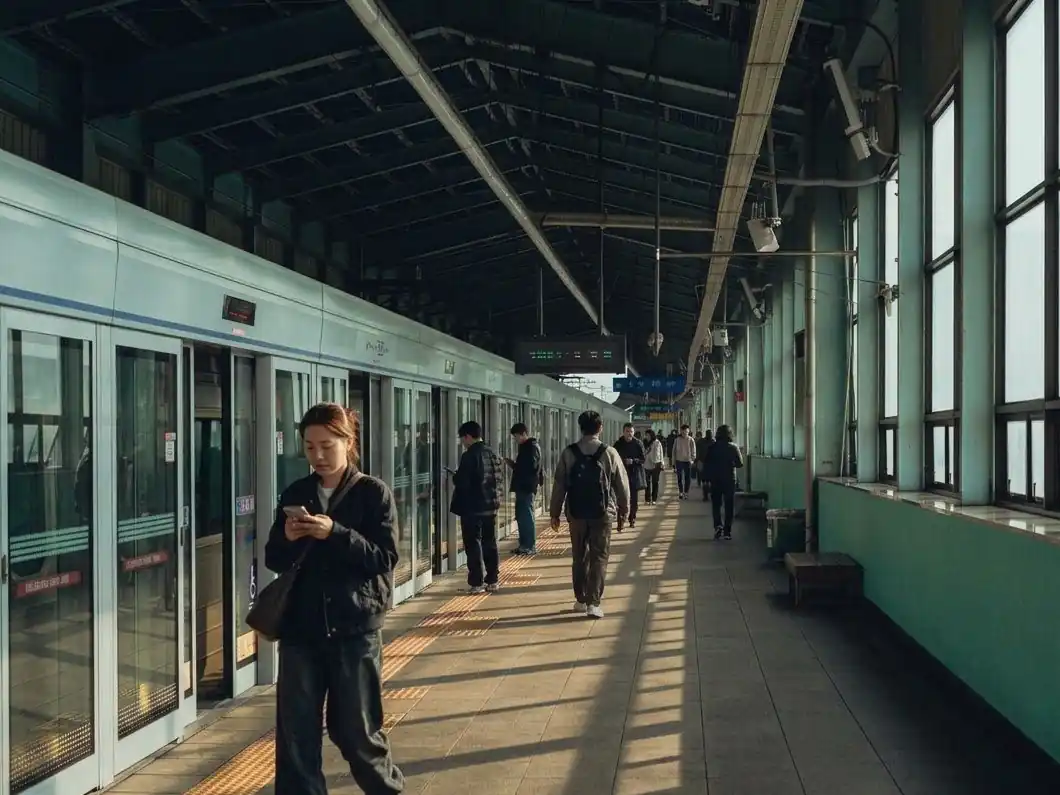
Seoul's Climate Card (기후동행카드) short-term pass gives unlimited rides for a set number of days. The day you load it counts as day 1, starting from the first train.
- Buy: at ticket kiosks in Seoul's Line 1–8 stations or convenience stores near stations. Since March 17, 2026, new machines at 273 stations on Lines 1–8 accept foreign cards such as Visa and Mastercard for the card and short-term passes, with an average 3.7% service fee.
- Covers: Seoul subway and Seoul-registered city, village and late-night buses. On AREX it covers Seoul Station to Gimpo Airport.
- Doesn't cover: the Shinbundang Line, metropolitan and airport buses, buses from Gyeonggi or Incheon, and shop payments.
- Airport trap: you can get off at Incheon Airport with it, but not board there — so it works on the way out, not on the way in.
- Top up: only after the current pass has expired. Reloading isn't possible at Korail, AREX or Shinbundang Line stations.
Always tap your Climate Card when you get off too. If you exit outside Seoul, staff will charge the extra fare separately.
On September 1, 2026, Seoul turned the 30-day Climate Card into the "Climate Pass". The 1–7 day short-term passes for visitors are still sold.
3. WOWPASS — transit card plus payment card
WOWPASS is built for visitors who don't want to carry much cash or rely on foreign cards.
- Pay: works as a debit card at shops that take Korean cards — no fee per payment, according to WOWPASS.
- Top up: at WOWPASS machines with cash in 16 currencies (yen, US dollars, Taiwan dollars, Hong Kong dollars, euros and more) or with a card in the app.
- Cash out: withdraw won for ₩1,000 a time (up to ₩100,000).
- Transit: tap it like T-money — but top up the transit balance separately, either by converting WOWPASS balance in the app (NFC) or with won at stations and convenience stores.
4. NAMANE — top up by card
- Card: ₩6,000 (basic). Transit runs on Korail Rail+, accepted on public transport nationwide.
- Top up: kiosks take credit cards and won cash; the app takes credit cards, Alipay+, cash at CU stores, and PayPay.
- Cash out: withdraw won at CU convenience stores.
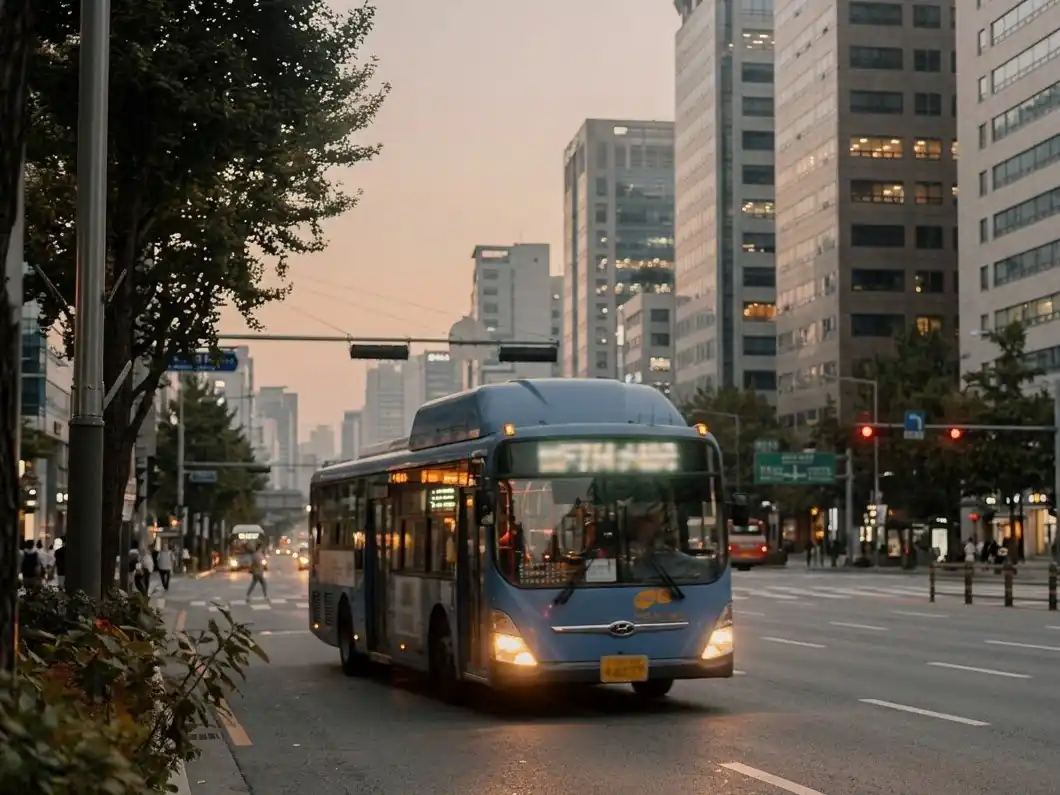
Seoul fares at a glance
| Ride | Transit card | Notes |
|---|---|---|
| Subway (first 10 km) | ₩1,550 | Single-journey ticket ₩1,650 |
| City bus (blue / green) | ₩1,500 | Cash ₩1,500 where accepted |
| Late-night bus | ₩2,500 | |
| Metropolitan (red) bus | ₩3,000 | Not covered by the Climate Card |
| Busan subway | ₩1,600 / ₩1,800 | Up to 10 km / over 10 km |
Transfers (Seoul): with a transit card, you get a transfer discount if you board the next bus or subway within 30 minutes of getting off (60 minutes between 9pm and 7am), for up to five rides in a row. You must tap when getting off the bus, or you lose the discount.
Cashless buses: 183 Seoul bus routes don't take cash at all (January 2026 list), and Busan City started a three-month cashless-bus trial on 35 routes on October 1, 2026 (riders with only cash can board and pay later by bank transfer). Keep a transit card on you.
How to top up a T-money card
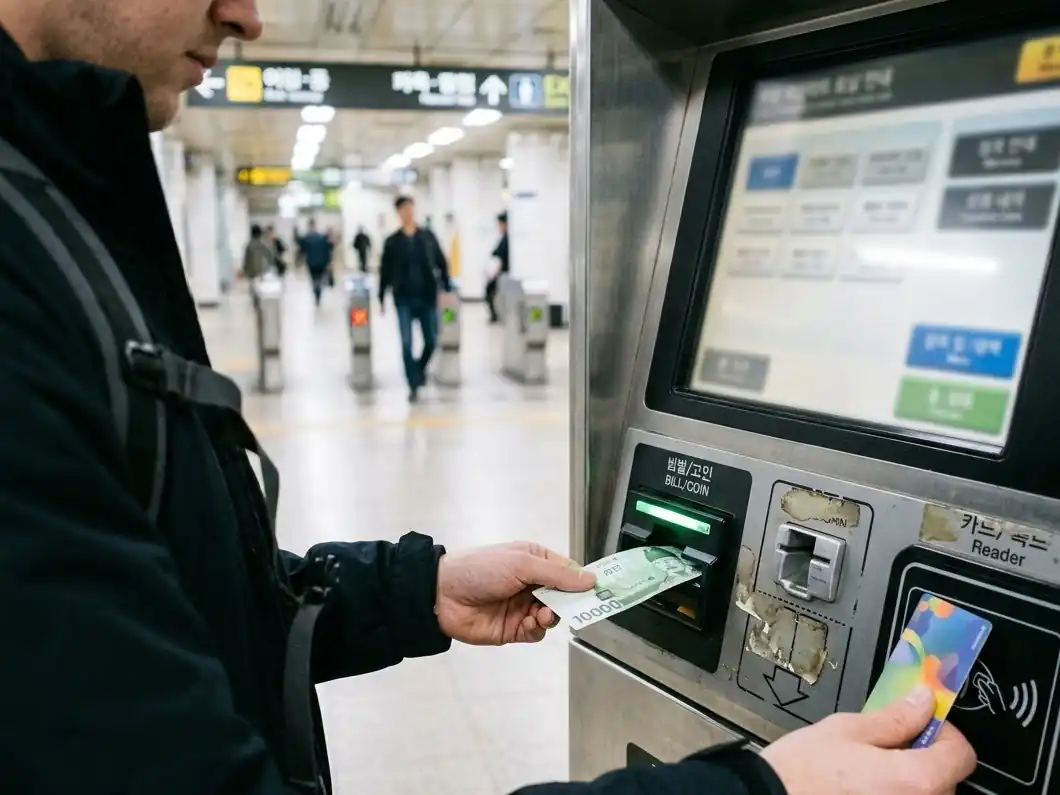
- Buy the cardAt a convenience store (look for the T-money logo at the counter) or the bus ticket office at Incheon Airport. Ask for a "T-money travel card".
- Top up with wonHand over the card and cash at the counter, or use the top-up machine in a subway station (switch the screen to English, place the card, insert notes).
- Tap in and outTap on the reader at the gate. On buses, tap when you get on and when you get off.
- Refund what's leftBefore you fly home, ask a convenience store for a balance refund (₩500 fee). The card itself isn't refunded — keep it for your next trip.
Going to Busan?
Your T-money (or NAMANE) card works in Busan too. Busan's subway costs ₩1,600 for up to 10 km. For lots of sightseeing, the Visit Busan Pass for foreign visitors costs ₩55,000 for 24 hours or ₩85,000 for 48 hours with free entry to listed attractions — only the physical card version doubles as a transit card. More in Where to stay in Busan.
Good to know
- Tapping a foreign credit card at the gate isn't possible yet in Seoul. Korean press reports that the city plans to roll out open-loop payments by 2030, starting with buses; no date has been announced for visitors.
- Apple Pay T-money: as of March 2026, the Wallet app still only tops up T-money with Korean Hyundai cards. Korean press reported that the T-money iOS app added a foreigner login with Mastercard, AMEX and UnionPay top-ups (not Visa).
- Korea Tour Card has been discontinued — guides that recommend it are out of date.
All the card apps and maps need data. Our Korea eSIM comparison covers the cheapest options, and Essential apps for Korea travel lists the apps that work without a Korean number.
Frequently asked questions
Can I use my credit card to tap onto the Seoul subway?
Not yet. Since March 17, 2026 you can buy a Climate Card or single-journey ticket with a foreign card at new machines in 273 stations, but you can't tap the card itself on the gates. You need a transit card.
Is the Climate Card worth it for tourists?
If you'll pay for four or more separate rides a day on the Seoul subway or city buses, yes — the 1-day pass is ₩5,000 and a ride is ₩1,550 (a transfer within 30 minutes counts as one fare). It doesn't cover the Shinbundang Line, airport buses or anything outside Seoul.
Can I top up T-money with a credit card?
T-money's official guide for visitors says top-ups are in Korean won cash, at convenience stores or subway machines. If you want to top up by card, NAMANE or WOWPASS (via its app) are the alternatives.
Can I use the Climate Card from Incheon Airport?
Only one way. You can get off at Incheon Airport with it, but you can't board there. From the airport into Seoul, use a T-money card or a single-journey ticket.
How do I get my T-money balance back?
Ask at a convenience store. You get the remaining balance in cash minus a ₩500 fee; the card price isn't refunded.
Sources: T-money (foreign visitor guide, Travel Card, Climate Card guide), Seoul Metropolitan Government (fares, Climate Card, foreign-card machines March 2026, cashless bus routes), Seoul Metro fare guide, Busan Transportation Corporation, WOWPASS, NAMANE, Visit Busan Pass official site, Busan Metropolitan City (cashless-bus trial, Sep 10, 2026); press reports from Korea JoongAng Daily (March 2026) and Korean news outlets on open-loop plans. All checked October 18, 2026.
Quick recap
- Short Seoul trip, lots of rides? Climate Card short-term pass (₩5,000 a day).
- Going beyond Seoul (Busan, Gyeonggi, airport buses)? A T-money card.
- Want a card that also pays in shops? WOWPASS or NAMANE.
Updated Oct 18, 2026

Every guide is checked against official sources and dated. We only recommend stays and eSIMs we have compared ourselves. About us →